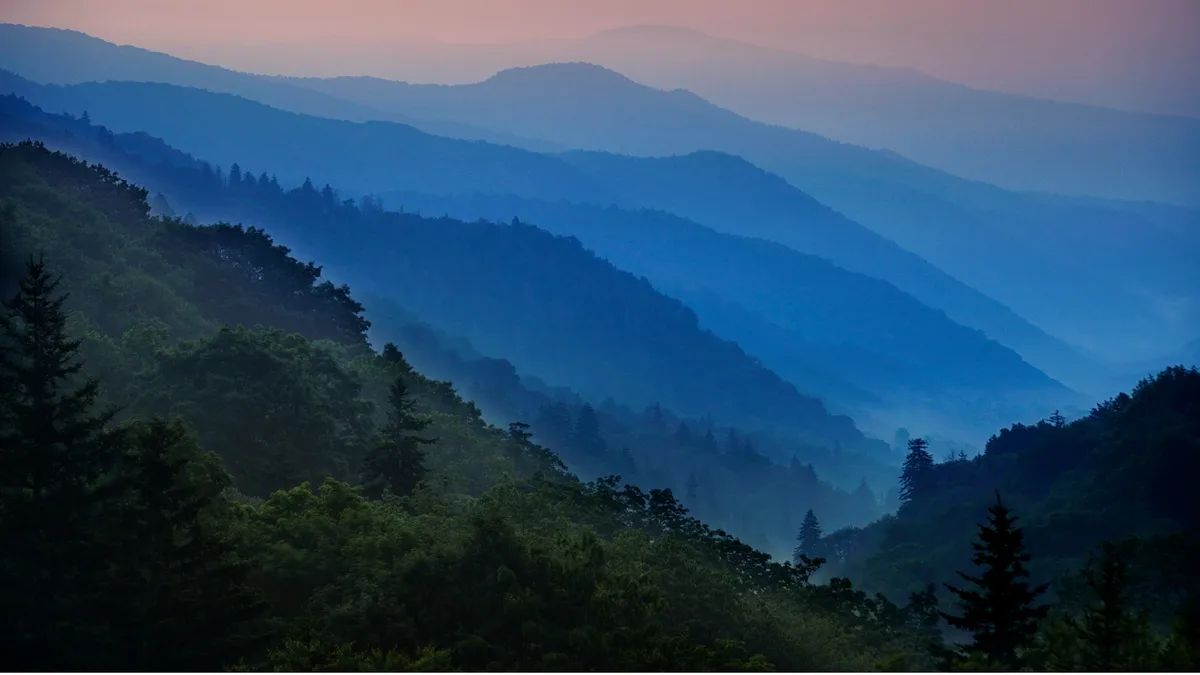
The Great Smoky Mountains straddle the Tennessee–North Carolina border, and they're the most-visited national park in the country by a wide margin — more than double the visitor count of the Grand Canyon. Part of that is accessibility (it's within a day's drive of a huge share of the U.S. population), and part of it is that unlike Yellowstone, Zion, or Grand Canyon, the Smokies don't charge you a dime just to enter.
General booking links below — swap in activity-specific links any time for higher conversion.
Getting There — Which Airport to Fly Into
Unlike a lot of national parks, the Smokies actually have a genuinely close major airport — no multi-hour Vegas-style drive required.
- Knoxville (TYS) — the best all-around choice. Only about 45–50 minutes from Gatlinburg, with regional and connecting service through most major U.S. hubs. This is the airport to book for almost everyone.
- Charlotte (CLT) — best for fare-shopping. About 3.5–4 hours to Gatlinburg, but a massive American Airlines hub with frequent nonstops from across the country — worth checking if Knoxville fares are running high.
- Nashville (BNA) — a second fare-shopping option. Also roughly 3.5–4 hours away, with strong Southwest coverage and often competitive fares from the middle of the country.
For most travelers, Knoxville wins even at a slightly higher fare — the time saved on the drive is usually worth more than what you'd save flying into Charlotte or Nashville.
No Entrance Fee — But Bring a Parking Tag
Great Smoky Mountains National Park has never charged a standard entrance fee, a condition tied to the original land deal that created the park in the 1930s. Since 2023, the park has instead required a paid parking tag for any vehicle parked longer than 15 minutes — a daily tag, a weekly tag, or an annual tag, all priced well below what comparable parks charge just to drive through the gate. It funds trail maintenance and search-and-rescue operations, and it's a small cost relative to what you'd pay at almost any other major national park.
Best Free Overlooks & Scenic Drives
Cades Cove
An 11-mile one-way loop road through a historic Appalachian settlement, with preserved 19th-century homesteads, churches, and a working grist mill scattered along the route. It's also the single best spot in the park for wildlife viewing — white-tailed deer are common, and black bear sightings happen regularly, especially at dawn and dusk. Free, though it gets genuinely congested on fall weekends; arrive early.
Newfound Gap
The park's main road crosses the state line at Newfound Gap, elevation 5,046 feet, with a large parking area and sweeping views in both directions. It's also the trailhead for a spur road up to the park's highest point.
Kuwohi (formerly Clingmans Dome)
At 6,643 feet, this is the highest point in the park and the third-highest peak east of the Mississippi. A steep but short half-mile paved trail leads to an observation tower with 360-degree views that, on a clear day, stretch over 100 miles. The National Park Service restored the peak's original Cherokee name, Kuwohi, in 2024. Free to hike; the access road can close in winter weather.
Roaring Fork Motor Nature Trail
A narrower, quieter loop just outside Gatlinburg, winding through old-growth forest past historic log cabins and a couple of roadside waterfalls. Much less crowded than Cades Cove and just as scenic — a good choice if the main loop is backed up.
Best Hikes — Free Access to All 800+ Miles of Trail
Every trail in the Smokies is free to hike — no permits, no parking fees beyond the standard tag. A few stand out for the effort-to-payoff ratio.
Laurel Falls Trail (2.6 miles round-trip, easy)
A paved, mostly gentle trail leading to an 80-foot waterfall — one of the most accessible waterfall hikes in the park, which also makes it one of the busiest. Go early or late in the day.
Alum Cave Trail (4.6 miles round-trip, moderate)
Passes through Arch Rock, a natural stone tunnel, and up to Alum Cave Bluffs, a massive overhanging rock face. It's also the most popular route up to Mount LeConte for hikers attempting the full summit.
Chimney Tops Trail (3.7 miles round-trip, strenuous)
A steep climb rewarded with one of the best panoramic views in the park from a rocky, exposed summit. Not for anyone uneasy with heights near the top, but it's one of the most-photographed vistas in the Smokies.
Fall Color Timing
Because the park spans such a wide elevation range — from about 875 feet to 6,643 feet — fall color doesn't arrive all at once. Higher elevations along Newfound Gap Road and around Kuwohi typically peak first, usually in mid-October, while lower valley elevations like Cades Cove and the areas around Gatlinburg often don't peak until early-to-mid November. That spread means you can chase color across a two- to three-week window just by changing elevation.
Budget-Friendly Activities In & Around the Smokies
Most of what makes the Smokies special is free, but these bookable experiences — mostly clustered in Gatlinburg and Pigeon Forge — are worth building into your trip.
1. Gatlinburg Moonshine Mountain Coaster — From $17
A gravity-powered mountain coaster on Anakeesta's mountaintop grounds above downtown Gatlinburg — you control your own speed on the way down, with valley views the whole ride.
Book Moonshine Mountain Coaster on Viator
2. Self-Guided Audio Driving Tour in Great Smoky Mountains — From $20
A GPS-triggered audio tour you follow by car, narrating the park's history, geology, and best stops as you drive — an easy way to add context to Newfound Gap Road or the Cades Cove loop without a group tour.
Book Self-Guided Audio Tour on Viator
3. Gatlinburg SkyLift & SkyBridge — From $42
A chairlift up Crockett Mountain to the longest pedestrian suspension bridge in North America, with a glass-floor section suspended over the valley — one of the most iconic paid views in the area, right in downtown Gatlinburg.
Book SkyLift & SkyBridge on GetYourGuide
4. Ripley's Aquarium of the Smokies: Entry Ticket — From $45
A large downtown Gatlinburg aquarium with a moving underwater tunnel through shark-filled waters — a reliable rainy-day option regardless of the weather.
Book Ripley's Aquarium on GetYourGuide
5. Great Smoky Mountains Redneck Comedy — From $49
A Pigeon Forge dinner-and-comedy show — a lighthearted, budget-friendlier alternative to the area's bigger dinner-theater productions.
Book Redneck Comedy on GetYourGuide
6. The Ultimate Wine, Shine & Bourbon Experience — From $52
A guided tasting tour through the Smokies' local wineries, moonshine distilleries, and bourbon stops — a relaxed way to sample the region's drinking culture without driving yourself between stops.
Book Wine, Shine & Bourbon Tour on Viator
7. Great Smoky Mountains Rafting — From $54
Guided whitewater rafting through Class III–IV rapids on the Pigeon River, just outside the park — a popular warm-season add-on for the more adventurous.
Two more worth knowing about even without a bookable link handy: a Cades Cove guided wildlife tour (a naturalist-led van or Jeep tour focused on spotting black bears and elk), and the Great Smoky Mountains Railroad, a scenic train departing from Bryson City on the North Carolina side.
👑 Splurge Picks — Worth Every Penny
Most of the Smokies is free or cheap — but these two are worth the extra spend for an experience you can't get any other way.
8. Great Smoky Mountains ATV — From $84
A guided off-road tour through the backcountry surrounding the park — terrain and views a standard hike or drive can't reach.
9. Great Smoky Mountains Zipline — From $84
A multi-line zipline course through the forest canopy near Gatlinburg — one of the most exhilarating ways to see the mountains from a completely different angle.
Where to Stay — Best Base Near the Smokies
Where you should stay depends mostly on how much you value being close to the action versus saving money. Here's how the options stack up:
💚 Pigeon Forge, TN
Best budget pick close to the park. Just a few minutes further from the entrance than Gatlinburg, with a much wider range of chain hotels and cabin rentals at noticeably better value.
🏨 Gatlinburg, TN
Best for convenience. The closest gateway town, walkable to the park's north entrance — but also the priciest and busiest, especially on fall weekends.
💰 Sevierville, TN
Best for maximum savings. Further out still, with the most affordable chain hotel options in the area — a reasonable trade of a slightly longer drive.
🍂 Cherokee / Bryson City, NC
Best for the quieter NC side. Generally less crowded and often better value than the Tennessee gateway towns, with easy access to Newfound Gap Road.
Where to Eat in the Smokies (Budget-Friendly & Iconic)
Gatlinburg and Pigeon Forge have a genuine food identity of their own — cheap mountain breakfasts, smoked barbecue, and a couple of splurge-worthy institutions worth planning a meal around.
⭐ Budget-Friendly Eats
- Gatlinburg's pancake houses — Gatlinburg has an unusually high concentration of pancake houses for its size, a genuine local tradition and one of the cheapest ways to fill up before a hike.
- The Donut Friar — A longtime Gatlinburg bakery known for apple cider donuts made fresh daily — a favorite quick, cheap stop.
- Local barbecue joints — Smoked barbecue is a regional staple throughout Sevier County. Try Preacher's Smokehouse or Delauder's BBQ in Sevierville, or Boss Hogg's BBQ Shack in Pigeon Forge, for affordable, no-frills smoked meats.
- Smoky Mountain trout — Fresh mountain trout shows up on menus all over the area — a budget-friendly way to eat a genuinely local specialty.
🍂 Smokies Favorites
- The Peddler Steakhouse — A longstanding Gatlinburg institution overlooking the river, known for its salad bar and steaks — a classic splurge dinner.
- Old Mill Restaurant — Southern comfort food served at a working 19th-century grist mill in Pigeon Forge — as much a historic sight as a meal.
📅 3-Day Great Smoky Mountains Itinerary
- Day 1: Cades Cove Loop at sunrise or sunset for wildlife and scenic overlooks, then an afternoon/evening in Gatlinburg — the SkyLift & SkyBridge, dinner at a pancake house or local barbecue joint.
- Day 2: Newfound Gap Road up to Kuwohi (Clingmans Dome), then the Laurel Falls Trail or Alum Cave Trail depending on your hiking level, followed by the Gatlinburg Moonshine Mountain Coaster before dinner.
- Day 3 — Choose one: Whitewater rafting on the Pigeon River, an ATV backcountry tour, or a Pigeon Forge day mixing Ripley's Aquarium with the Redneck Comedy dinner show.
💡 Final Tips for Visiting the Smokies on a Budget
- Buy your parking tag online in advance — it's required for any stop over 15 minutes and lines can build up at park visitor centers during peak fall weekends.
- Visit mid-October through mid-November for peak fall color, but expect the heaviest crowds and traffic of the year — arrive at Cades Cove and popular overlooks early morning.
- Book Gatlinburg and Pigeon Forge hotels or cabins well ahead of fall weekends — rates and availability tighten fast in October.
- Cades Cove Loop Road can take 2-4 hours in fall traffic — build in extra time or go at opening.
- Layer up — temperatures at higher elevations like Kuwohi/Clingmans Dome can be 10-20°F cooler than the valley towns.
- Fill up on gas and groceries before entering the park — there are no gas stations inside Great Smoky Mountains National Park.
- Cell service is unreliable through most of the park — download offline maps and directions before you head in.