Why Mexico Is One of the World's Best Value Destinations
Ask seasoned travelers where to stretch a vacation budget further than almost anywhere else, and Mexico comes up again and again. It is not hard to see why. You can fly direct from nearly every major US and Canadian city — often for under $200 round trip — land in a destination that delivers world-class beaches, ancient ruins, extraordinary food, and a culture that rewards curiosity at every turn. And yet you still spend less per day than you would on a week in Florida.
Mexico is the tenth largest country on Earth, covering everything from Pacific surf towns to Caribbean reef systems, from pine-forested highlands to volcanic lakes. It shares a 1,954-mile border with the United States, which means short flight times — just 2.5 hours from Dallas to Cancun, 3 hours from Los Angeles to Cabo — and a massive number of competing airlines keeping fares competitive year-round.
Beyond geography, the value proposition is extraordinary. A four-star hotel in Cancun's Hotel Zone costs a fraction of its equivalent in Miami. A full taco lunch from a street vendor in Mexico City runs about $3. A cenote snorkeling tour — one of the most magical natural experiences on the planet — goes for $30–$50. And an all-inclusive resort package on the Riviera Maya regularly comes in under $150 per person per night when booked right, covering flights, accommodation, unlimited food, drinks, and entertainment.
For 2026, Mexico remains one of the most visited international destinations for Americans, with over 35 million tourist arrivals projected. Demand is high, but so is the infrastructure — which means competitive pricing if you know where to look. This guide will show you exactly where and how.
Best Time to Visit Mexico
Mexico's size means weather varies dramatically by region, but for the most popular tourist areas — the Yucatan Peninsula, the Riviera Maya, and Los Cabos — timing your trip smartly can save you hundreds of dollars and spare you from oppressive heat or tropical storms.
Month-by-Month Overview (Caribbean & Gulf Coast)
Peak Season: December–April
This is when Mexico's Caribbean coast is at its finest. Temperatures hover in the mid-80s°F (28–30°C), humidity is manageable, and there is virtually no rain. The tradeoff is higher hotel rates — particularly around Christmas, New Year's, and US Spring Break (mid-March through mid-April). Book at least 60–90 days in advance for the best rates during these windows, and compare package deals on Expedia versus booking components separately.
Shoulder Season: May and October–November
These are the hidden sweet spots. May brings warm weather and far fewer tourists before school ends in the US, while October and November offer post-hurricane-season clarity and some of the lowest hotel rates of the year. You can routinely find all-inclusive resorts for 30–40% less than peak pricing during these months. Use Travelzoo to track flash deals, which concentrate heavily in the shoulder periods.
Hurricane Season: June–September
June through September is technically hurricane season for the Gulf of Mexico and Caribbean. September is the riskiest month. That said, actual hurricane landfalls on tourist areas are relatively rare. If you travel during this period, ensure your travel insurance covers weather cancellations — and watch for deep discounts. Deals can be extraordinary, and many weeks pass with nothing but sunshine.
Pacific Coast Timing (Cabo, Puerto Vallarta)
The Pacific side operates on a slightly different schedule. Puerto Vallarta's rainy season runs May–October but typically delivers brief afternoon showers rather than all-day downpours. Los Cabos at the tip of Baja sees far less rain overall and can be pleasantly mild even in summer. Winter is still peak season on the Pacific, especially December–March when whale watching is at its best.
Top Destinations in Mexico for 2026
Mexico has more to offer than most travelers ever discover on a single trip. Here are the destinations that consistently deliver the best experiences across different travel styles and budgets.
Cancun
Cancun is Mexico's most visited resort city, and for good reason. The famous Hotel Zone (Zona Hotelera) stretches along a 14-mile barrier island separating the turquoise Caribbean from a calm lagoon, lined with all-inclusive megahotels, beach clubs, and restaurants. The water here is genuinely that shade of blue you see in photos — warm, clear, and calm enough for swimming most of the year.
For budget travelers, Cancun's secret is its downtown (El Centro), where local restaurants, street food markets, and budget guesthouses cater entirely to Mexican travelers and long-term visitors. A bowl of soup and a plate of tacos at a downtown lunch counter runs about $5. Meanwhile, the Hotel Zone offers the full-service resort experience — often most affordable when booked as an Expedia package combining flights and all-inclusive hotel.
Do not spend all your time at the beach. Cancun makes an excellent base for day trips to the Riviera Maya's cenotes (natural limestone sinkholes filled with crystalline freshwater), the ancient Mayan city of Chichen Itza (about 2.5 hours by ADO bus), the reef island of Isla Mujeres (15-minute ferry), and the ruins at Tulum. You can realistically see all of these in a week-long trip.
Tulum
Where Cancun is unapologetically resort-commercial, Tulum has carved out a reputation as Mexico's eco-chic capital — though "budget" is no longer quite the right word. Tulum has become genuinely upscale, with boutique jungle hotels built from local materials, rooftop yoga studios, and farm-to-table restaurants drawing a well-heeled international crowd.
That said, Tulum still delivers extraordinary value compared to comparable destinations in Europe or the Caribbean. Boutique hotels with private plunge pools and lush garden settings run $120–$250 per night, while the town's Pueblo district (5 minutes from the beach road) has affordable guesthouses, excellent taquerias, and a relaxed backpacker scene. Consider booking a private villa or bungalow through VRBO — you can often find private homes with pools for groups of 4–8 that undercut boutique hotel pricing significantly.
The Tulum Archaeological Zone sits atop cliffs overlooking the Caribbean — one of the few Mayan sites directly on the coast — and is stunning at sunrise before the crowds arrive. The cenotes scattered through the surrounding jungle are among the most beautiful in Mexico, with underground cave systems explored by snorkel or scuba. Tulum also has a growing bike-friendly culture; renting a bicycle is the best (and cheapest) way to explore both the town and the beach road.
Los Cabos (Cabo San Lucas)
At the southern tip of Baja California, Los Cabos encompasses two towns — Cabo San Lucas and San José del Cabo — connected by a 20-mile "tourist corridor" of luxury resorts. Cabo has a reputation for exclusive, high-end travel, but savvy travelers can experience it at a fraction of what the glossy brochures suggest.
The iconic landmark is El Arco (The Arch), a dramatic natural rock formation at Land's End where the Pacific meets the Sea of Cortez. Boat tours to El Arco run about $15–$25 and are unmissable. December through April brings gray whales to the warm waters of the Baja peninsula — whale watching tours are an extraordinary experience and one of the best wildlife encounters in the Americas.
San José del Cabo is the quieter, more colonial of the two towns, with an art gallery district, excellent seafood restaurants, and a relaxed plaza culture. It tends to have lower hotel rates than the flashier Cabo San Lucas strip. If you plan to explore beyond your resort, renting a car is essential on the Baja peninsula — the best rates are found by comparing options on DiscoverCars, which aggregates multiple local and international rental companies for a single comparison.
Puerto Vallarta
Puerto Vallarta is arguably Mexico's most livable beach city — a place where expats, digital nomads, and repeat visitors come back year after year. Nestled between the Pacific Ocean and the Sierra Madre mountains where they tumble straight into Banderas Bay, PV combines genuine Mexican culture with world-class dining and exceptional natural beauty.
The Zona Romántica (Old Town) is the heart of the city: cobblestone streets lined with bougainvillea, independent art galleries showcasing local masters, seafood restaurants with ocean terraces, and one of Mexico's most welcoming LGBTQ+ travel scenes. The Malecon boardwalk stretches north from the old town with public sculpture, street performers, and stunning sunsets.
Beyond the city, the surrounding jungle opens up to adventure. Zip-line canopy tours through the mountains, ATV rides to hidden waterfalls, kayaking through mangroves, and humpback whale watching (December–March) are all accessible for $40–$90 per person. Puerto Vallarta also has a serious food scene — the Sunday organic market in Colonia Versalles is a highlight, and the city's restaurants consistently rank among Mexico's best outside of Mexico City.
Mexico City (CDMX)
Mexico City is the cultural powerhouse of Latin America, a megalopolis of 22 million people that somehow manages to be one of the most walkable, affordable, and food-obsessed cities in the world. If you have never considered it as a vacation destination, this is the year to reconsider.
The food alone justifies the trip. Mexico City has more restaurants than New York City, a world-class street taco scene (a taco from a taquero cart costs 15–25 Mexican pesos, roughly $1–$1.50), and two Michelin-starred restaurants. The Mercado de San Juan stocks artisan products and gourmet street food. The Mercado Jamaica overflows with flowers and produce. Eating like a local in CDMX on $10–$15 per day is not only possible, it is genuinely excellent.
Culturally, Mexico City rivals any European capital. The Museo Nacional de Antropologia houses the world's greatest collection of pre-Columbian artifacts. The Frida Kahlo Museum (Casa Azul) in the Coyoacan neighborhood draws visitors from across the world. Teotihuacan — one of the ancient world's largest cities, with its towering Pyramid of the Sun and Moon — is just 30 miles northeast, easily reached by bus. For organized city tours and day trips to Teotihuacan, Viator and GetYourGuide both list highly rated options with skip-the-line access and local expert guides.
Hotel costs in Mexico City are among the lowest of any world capital. A well-located four-star hotel in Polanco or Condesa runs $80–$150 per night. The Reforma/Roma/Condesa triangle is the epicenter of the city's food, culture, and nightlife scenes. Compare options on Booking.com or check Trivago to ensure you're getting the best available rate.
Playa del Carmen
Playa del Carmen has evolved from a sleepy fishing village into one of the Riviera Maya's most popular destinations, sitting midway between Cancun (45 minutes north) and Tulum (45 minutes south). Its strength is its pedestrian lifestyle — the famous 5th Avenue (Quinta Avenida) is a long stretch of shops, restaurants, juice bars, and beachside bars that invites hours of wandering.
Playa's beach clubs are excellent — some are free to access if you buy food and drinks, while others charge a day-pass entry fee that's usually worth it for the service, lounge chairs, and pools. The ferry terminal on the beach connects to Cozumel, one of the world's premier scuba diving destinations, in just 30–45 minutes. A round-trip ferry ticket runs about $20, and dive operators on Cozumel cater to all levels from beginners to advanced cave divers.
For accommodation, Playa offers the full spectrum — backpacker hostels from $15/night in the town center, boutique hotels with rooftop pools in the $80–$160 range, and full all-inclusive resorts along the beach strip. Search Expedia hotels filtered to Playa del Carmen for the widest selection, or check Booking.com which often has exclusive last-minute rates at local properties.
Budget Breakdown by Destination
How much does Mexico actually cost? The range is enormous depending on your style. Here is a realistic daily per-person budget for common scenarios, excluding flights:
| Destination | Budget Traveler | Mid-Range | Comfortable/Resort |
|---|---|---|---|
| Cancun (Hotel Zone, all-inclusive) | $80–$110/day | $130–$180/day | $200–$350+/day |
| Tulum | $60–$90/day | $110–$180/day | $200–$400+/day |
| Playa del Carmen | $45–$70/day | $90–$150/day | $170–$300/day |
| Los Cabos | $80–$120/day | $140–$220/day | $250–$500+/day |
| Puerto Vallarta | $50–$80/day | $100–$160/day | $180–$300/day |
| Mexico City | $30–$55/day | $70–$120/day | $130–$220/day |
Notes: All-inclusive resorts at Cancun bundle accommodation, meals, drinks, and most entertainment into one rate — your "resort daily cost" is often lower than an equivalent mid-range independent trip once you factor in food and drinks. Budget figures assume shared accommodation or basic guesthouses; mid-range assumes 3–4 star hotels with private rooms.
Getting to Mexico: Flights
Mexico is served by more US nonstop routes than almost any other international destination. Every major US hub city has multiple daily direct flights to at least one Mexican airport. This competition keeps fares remarkably low — but timing and flexibility matter.
The Cheapest Airport: Cancun (CUN)
Cancun International Airport is almost always the cheapest entry point into Mexico's Caribbean coast, thanks to the sheer volume of airlines competing for seats. American, Delta, United, Southwest, Spirit, Frontier, JetBlue, WestJet, and multiple international carriers all serve CUN from dozens of North American cities. Round-trip fares from major US cities regularly drop below $199, and shoulder-season deals can go as low as $149.
Flying into Cancun also positions you perfectly for the entire Riviera Maya — Playa del Carmen is 45 minutes south, Tulum is 90 minutes south, and the ancient ruins of Chichen Itza are 2.5 hours west by bus. You can cover an enormous amount of Mexico's most popular territory without flying again.
Finding the Best Flight Prices
Use a flight meta-search engine to compare fares across all carriers simultaneously. Aviasales is particularly strong for international routes and often surfaces low-cost carrier fares that other tools miss. Booking.com flights is worth checking too, especially if you are bundling with a hotel — their combined booking discounts can save meaningful money.
Key flight tips for Mexico:
- Book 6–10 weeks out for peak season travel (December–April). Prices rise sharply inside 30 days.
- Fly mid-week — Tuesday and Wednesday departures are consistently $20–$60 cheaper than Friday or Sunday.
- Set fare alerts for your route. Both Aviasales and Booking.com offer email alerts when prices drop to a target level.
- Consider adjacent airports — flying into Merida instead of Cancun can be cheaper if you plan to spend time in the Yucatan interior. For Mexico City trips, the new Felipe Angeles Airport (NLU) sometimes has cheaper arriving fares than the main Benito Juarez International (MEX).
- Check Spirit and Frontier for ultra-low base fares, but read the baggage fee fine print carefully before celebrating.
Other Major Entry Points
- Los Cabos (SJD) — Direct flights from most West Coast and Southwest US cities. LA, Phoenix, Denver, Dallas all have strong service.
- Mexico City (MEX) — Best connection point for mainland Mexico. Aeromexico hub with extensive domestic network.
- Puerto Vallarta (PVR) — Direct from US/Canada mainly in winter peak season; fewer year-round direct options.
- Cozumel (CZM) — A handful of direct US flights, primarily winter season.
Where to Stay: All-Inclusive vs. Boutique vs. VRBO
One of the biggest decisions for a Mexico trip is accommodation style. Each option has a genuine best-fit scenario, and understanding the tradeoffs saves both money and frustration.
All-Inclusive Resorts: When They Make Sense
All-inclusives are the dominant accommodation model in Cancun, the Riviera Maya, and Los Cabos for a reason — they deliver exceptional value when used correctly. Unlimited food, drinks (including alcohol), entertainment, pools, beach access, and most non-motorized water sports are included in one daily rate. For families, couples, or groups who plan to spend most of their time at the resort, the math is hard to beat.
The best all-inclusive prices come from bundling your flight and hotel into a single package. Expedia's Mexico vacation packages are consistently strong — the platform negotiates block rates with resorts that individual booking simply cannot match. Always compare the package total against booking components separately.
All-inclusives work best when you want to unplug completely, are traveling with children, do not want to think about the bill at every meal, or are budget-conscious and want total cost certainty. They work less well if you are eager to explore local restaurants, culture, and towns beyond the resort walls.
Boutique Hotels: For the Authentic Experience
Boutique hotels — small, independently owned properties with 10–40 rooms — are the soul of destinations like Tulum, Puerto Vallarta's Zona Romántica, San José del Cabo's colonial center, and Mexico City's Roma and Condesa neighborhoods. They rarely match all-inclusives on value-per-dollar, but they deliver an authentic sense of place that chain resorts cannot replicate.
Search boutique options on Booking.com, which has the most comprehensive inventory of small independent properties in Mexico, or Expedia hotels for a broader comparison including chains. Use Trivago to quickly scan whether a specific property is cheaper on one booking platform versus another — this takes 60 seconds and can save $15–$40 per night.
VRBO Vacation Rentals: For Groups and Longer Stays
For groups of four or more, or for stays of a week or longer, vacation rentals through VRBO often beat hotel pricing dramatically. A private three-bedroom villa with a pool in Tulum sleeps six and might cost $250–$350 per night total — that is $40–$60 per person, well below what individuals would pay for separate hotel rooms. You also get a full kitchen (crucial for cutting food costs) and the experience of living in a neighborhood rather than a resort compound.
VRBO is particularly strong in Tulum, Puerto Vallarta, and Mexico City, where there is a large inventory of private homes, condos, and apartments. The platform verifies owners and properties, and its review system is reliable for spotting consistently well-run listings.
Getting Around Mexico
Rental Car: Essential for the Riviera Maya & Baja
If your Mexico itinerary involves exploring cenotes, beach towns, or archaeological sites along the Riviera Maya, a rental car transforms your trip. Public transport to most cenotes is impractical, and the highway between Cancun and Tulum (Hwy 307) is safe, well-signed, and lined with attractions. Similarly, the Baja peninsula between Los Cabos and La Paz rewards drivers with dramatic desert and coastal scenery unreachable by bus.
Compare rental prices across local and international agencies on DiscoverCars before booking. A few important notes for renting in Mexico:
- Always purchase the full coverage insurance offered by the rental company. Mexico does not recognize US personal auto insurance or credit card coverage the same way as in the US — driving without local coverage exposes you to enormous liability.
- Stick to daytime driving in unfamiliar areas, particularly on secondary roads.
- Speed bumps (topes) are common and unmarked — slow down through any town or village.
- Many toll roads on Hwy 307 accept cash only. Keep small bills handy.
ADO Buses: The Best Way Between Cities
Mexico's ADO bus network is one of the best in Latin America — modern, air-conditioned, reliable, and remarkably affordable. Cancun to Playa del Carmen costs about $5–$8 USD. Cancun to Tulum runs about $10. Merida to Cancun is about $20–$25. Buses run frequently, depart from central terminals, and the deluxe service (ADO GL) offers reclining business-class seats for long-distance overnight routes. The ADO website and app accept credit cards for advance booking.
Cancun Airport: Taxi vs. Uber vs. Shuttle
Getting from Cancun airport to your hotel is an area where tourists frequently overpay. The official airport taxis are fixed-rate by zone and not negotiable — prices from the airport to the Hotel Zone run $30–$55 depending on your destination. Uber is available in Cancun and costs roughly half that, but drivers cannot pick up from inside the airport terminal — you will need to walk a short distance to a designated pickup area. Shared shuttle services like Cancun Transfers book in advance and can be the best value for solo travelers or couples heading to the Hotel Zone.
Uber and Local Taxis
Uber operates in Cancun, Mexico City, Guadalajara, Monterrey, and several other major cities. In Mexico City specifically, Uber is the preferred transport option for tourists — it is safe, reliable, and eliminates the language barrier of negotiating fares with street taxis. In destinations without Uber, use authorized hotel taxis or negotiate the fare before entering any cab.
Mexican Food Guide: Eat Like a Local
Mexican cuisine is a UNESCO Intangible Cultural Heritage — and eating your way through it is one of the greatest pleasures of visiting. The paradox of Mexican food is that the best and most authentic versions are often the cheapest. Street vendors and market fondas consistently outshine hotel restaurants on flavor, and they cost a fraction of the price.
What to Eat
- Tacos al pastor — Pork marinated in chili and achiote, cooked on a vertical spit with pineapple. The benchmark for any taqueria. $0.75–$1.50 each.
- Cochinita pibil — Slow-roasted pork in citrus and achiote, wrapped in banana leaf, originally from the Yucatan. Found everywhere in Cancun and the Riviera Maya.
- Ceviche and aguachile — Fresh seafood marinated in lime, chili, and onion. Abundant on the coasts. A full plate runs $5–$10 at a mercado.
- Chiles en nogada — Stuffed poblano peppers with walnut cream sauce, available August–September, considered Mexico's national dish.
- Tamales — Masa dough stuffed with meat, cheese, or fruit, wrapped in corn husks or banana leaf and steamed. Breakfast staple, about $1–$2 each.
- Tlayudas — Oaxacan flatbreads with beans, tasajo (dried beef), and chapulines (grasshoppers, optional but genuinely good).
- Pozole — Hearty hominy soup, red or green, loaded with shredded pork or chicken. Mexico City's comfort food on cold evenings.
Where to Eat for Less
Mercado food stalls (fondas) are the single best hack for eating well and cheaply in Mexico. Every town and city has a central market where local cooks serve a fixed two- or three-course comida corrida (lunch special) for $3–$6. This might be soup, a main dish of rice, beans, and protein, fresh salsa, and agua fresca. The quality is almost always excellent.
On $10 per day for food in Mexico City or Oaxaca, you can eat extremely well — breakfast tacos for $2, a market comida corrida for $4–$5, and street snacks or a taco dinner for $3. On the Caribbean coast (Cancun, Tulum), food costs more because of tourist infrastructure, but the downtown areas of both cities have local markets and taquerias where the same $10 budget works well.
Drinks
Mezcal is Mexico's great artisanal spirit — smoky, complex, and increasingly recognized globally. Order mezcal neat in any bar south of the US border; adding it to cocktails is considered a waste. Tequila's northern rival in recent years, mezcal is produced primarily in Oaxaca from wild-harvested agave plants.
Mexican craft beer has exploded in quality. Cerveceria Colima, Calavera, and Wendlandt are names worth seeking out. And fresh agua fresca — sweet drinks made from hibiscus, tamarind, watermelon, or cucumber — are everywhere for about $1 a glass and are essential hydration in the heat.
Water safety: Do not drink tap water anywhere in Mexico. Bottled water is widely available and cheap ($0.50 for a liter). Most hotels provide purified water for free in large dispensers. Restaurants use purified water for ice and food preparation — you do not need to avoid salads or vegetables at reputable restaurants.
Safety Tips for Tourists in Mexico
Mexico's security situation is complex and varies enormously by region. For the vast majority of tourists visiting the country's most popular destinations, Mexico is safe and welcoming — millions of Americans, Canadians, and Europeans visit without incident every year. That said, practical awareness goes a long way.
Where Tourists Travel Most Safely
The Yucatan Peninsula (Cancun, Playa del Carmen, Tulum, Merida), Los Cabos, Puerto Vallarta, and Mexico City's main tourist neighborhoods consistently receive the lowest traveler advisory ratings. These areas have significant tourist infrastructure, well-established hospitality industries, and are heavily invested in visitor safety.
Practical Safety Tips
- Use Uber instead of hailing street taxis in major cities. In Mexico City especially, "express kidnappings" from unlicensed taxis were a genuine concern in past years. Uber and authorized app-based rides have made this far less of an issue.
- Avoid traveling after dark on secondary roads, particularly between cities. Highway robbery, while rare in tourist corridors, is a documented risk on certain rural routes at night.
- Don't flash expensive gear. A DSLR camera, visible laptop, or high-end jewelry attracts attention. Petty theft is the most common crime affecting tourists.
- Keep a small amount of local cash separate from your main wallet. In the unlikely event of a theft or confrontation, handing over a small amount of cash resolves most situations without endangering your passport or cards.
- Check the US State Department travel advisory for your specific destination before traveling. The advisory is divided by state, and conditions vary significantly across Mexico's 31 states.
- Stick to major toll roads (cuotas) when driving, particularly in the Yucatan. These are well-maintained, well-lit, and patrolled more effectively than free roads.
- Purchase comprehensive travel insurance covering medical evacuation. Mexico's private hospitals are excellent, but costs without insurance can be steep. Most US domestic health plans provide very limited or no coverage abroad.
The bottom line: exercise the same situational awareness you would in any major urban destination. Be aware of your surroundings, avoid obviously risky behavior, and you will almost certainly find Mexico to be an extraordinarily hospitable place.
Top Activities Worth Paying For
Mexico has no shortage of free or cheap things to do — exploring markets, walking colonial town centers, visiting public beaches. But certain experiences justify the splurge, and booking them through a reputable tour operator ensures quality and often provides skip-the-line access.
Cenote Tours
The Yucatan Peninsula sits atop one of the world's largest underground river systems, dotted with thousands of cenotes — open-air or partially enclosed sinkholes with crystal-clear freshwater. Swimming, snorkeling, or diving in a cenote is unlike anything else in the world: the visibility can exceed 100 feet, the water is a brilliant turquoise-green, and stalactites and stalagmites in cave cenotes create an otherworldly atmosphere.
Popular cenotes like Ik Kil (near Chichen Itza), Gran Cenote and Dos Ojos (near Tulum), and Cenote Suytun charge $10–$25 for entry. Guided cenote tours — including transportation from Cancun or Playa del Carmen, snorkel gear, and stops at multiple cenotes — run $40–$75 and are bookable through Viator or GetYourGuide.
Chichen Itza
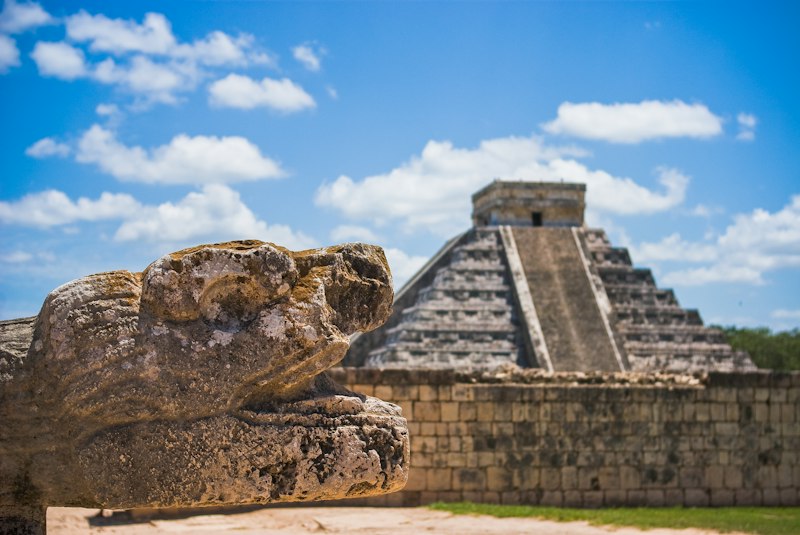
One of the Seven Wonders of the Modern World, Chichen Itza is among the most visited archaeological sites in the Americas. The iconic El Castillo pyramid is stunning in person — larger and more dramatic than any photo conveys. Arrive at opening time (8 a.m.) to beat the crowds and the midday heat. Guided tours from Cancun or Playa del Carmen run $55–$90 including transportation, entrance fees, and a cenote stop. Book through Viator for the widest selection of operator ratings and pickup locations.
Whale Shark Swimming
Every summer (June–September), the waters around Isla Holbox and Isla Contoy north of Cancun draw the world's largest fish — whale sharks — in aggregations of dozens. Snorkeling alongside these gentle, filter-feeding giants is one of the most exhilarating wildlife experiences on Earth. Tours run approximately $100–$130 per person and must be booked in advance through licensed operators. GetYourGuide lists verified operators for this experience.
Tulum Ruins at Sunrise
The Tulum Archaeological Zone at sunrise — before the crowds, with the ruins perched on limestone cliffs above a turquoise sea catching the first light — is one of Mexico's most beautiful sights. The site opens at 8 a.m.; arriving at opening means you will have the main pyramid largely to yourself for the first 30–45 minutes. Admission is $8–$10 USD. A guided tour provides essential historical context that self-visiting misses entirely.
Lucha Libre (Mexico City)
Mexico's theatrical masked wrestling spectacle is one of the most energetically fun evenings you can have in Mexico City. The Arena Mexico hosts matches most Tuesday, Friday, and Sunday evenings for about $15–$35 for good seats. The combination of acrobatic athleticism, flamboyant costumes, audience participation, and street food sold in the stands makes for an unforgettable local cultural experience.
Mayan Cooking Classes
A half-day cooking class with a local chef — learning to make cochinita pibil, handmade tortillas, and a regional mole — costs $60–$90 in most Yucatan destinations and is consistently one of the highest-rated tour activities for repeat Mexico visitors. Viator lists strong options in Cancun, Playa del Carmen, and Merida.
Money-Saving Tips & Final Checklist
Book Packages, Not Pieces
For beach resort destinations (Cancun, Riviera Maya, Los Cabos), bundling flights and an all-inclusive hotel through Expedia vacation packages almost always delivers lower total cost than booking components separately. Expedia's package pricing reflects negotiated block rates unavailable to individual bookers. Run both calculations before committing.
Travel Shoulder Season
May, October, and early November are the three months offering the best combination of pleasant weather and reduced prices. Resort rates drop 25–40%, airlines run fewer peak surcharges, and popular sites like Chichen Itza and cenotes have significantly shorter queues. Watch for limited-time deals through Travelzoo, which often surfaces Mexico packages at genuinely exceptional prices during shoulder season.
Use the All-Inclusive for What It's Worth
If you book an all-inclusive, use it. Every meal and drink at the resort versus outside represents real value already paid for. Plan excursions for full days so you minimize meals skipped at the resort. Many all-inclusives also include free or discounted airport transfers — confirm this at booking to avoid paying separately.
Compare Hotels Across Platforms
The same hotel room can vary by $15–$40 per night across booking platforms due to different negotiated rates and commission structures. Always run your preferred property through Trivago before booking — it compares rates across Booking.com, Expedia, Hotels.com, and direct hotel sites simultaneously in under a minute.
Stay a Little Farther Back
At Cancun's Hotel Zone, oceanfront rooms command a significant premium over "partial ocean view" or "garden view" rooms in the same resort. Since most all-inclusive guests spend the day at the pool or beach rather than in their room, the view differential is less impactful than the price differential. The same applies in Tulum — a jungle bungalow 10 minutes from the beach can cost half what a beachfront property charges.
Eat Downtown
Every major Mexican beach resort city has a downtown district where prices reflect local Mexican standards rather than tourist economics. In Cancun, the downtown (El Centro) is a 15-minute bus ride from the Hotel Zone. In Playa del Carmen, the western side of 5th Avenue transitions rapidly into local neighborhoods. In Tulum, the Pueblo section has taquerias charging $1–$2 per taco. Make time for at least a few meals here, and your food budget will thank you.
Get a Mexican SIM Card at the Airport
Telcel and AT&T Mexico both sell prepaid SIM cards at Cancun and Mexico City airports for $10–$20 with generous data allowances. Having local data coverage means you can use Uber, Google Maps, and WhatsApp without worrying about international roaming charges from your home carrier. It pays for itself the first time you avoid a $30 overpriced airport taxi fare by using Uber instead.
- Best time to visit: November–April (avoid June–September on Caribbean coast)
- Cheapest flights: Search on Aviasales; fly into Cancun (CUN) for best fares
- Best hotel value: All-inclusive packages via Expedia; boutiques on Booking.com; groups on VRBO
- Car rentals: Compare on DiscoverCars; always buy local insurance
- Top experiences: Book tours via Viator or GetYourGuide
- Deals & flash sales: Follow Travelzoo for Mexico package alerts
- Safety: Use Uber in cities, stick to toll roads when driving, check US State Dept advisories by state
- Food budget: $10–$15/day is entirely feasible eating at markets and street stalls
Find the Best Mexico Vacation Deals
Compare all-inclusive packages, hotels, and flights — updated daily.
Cancun Deals Browse All Packages