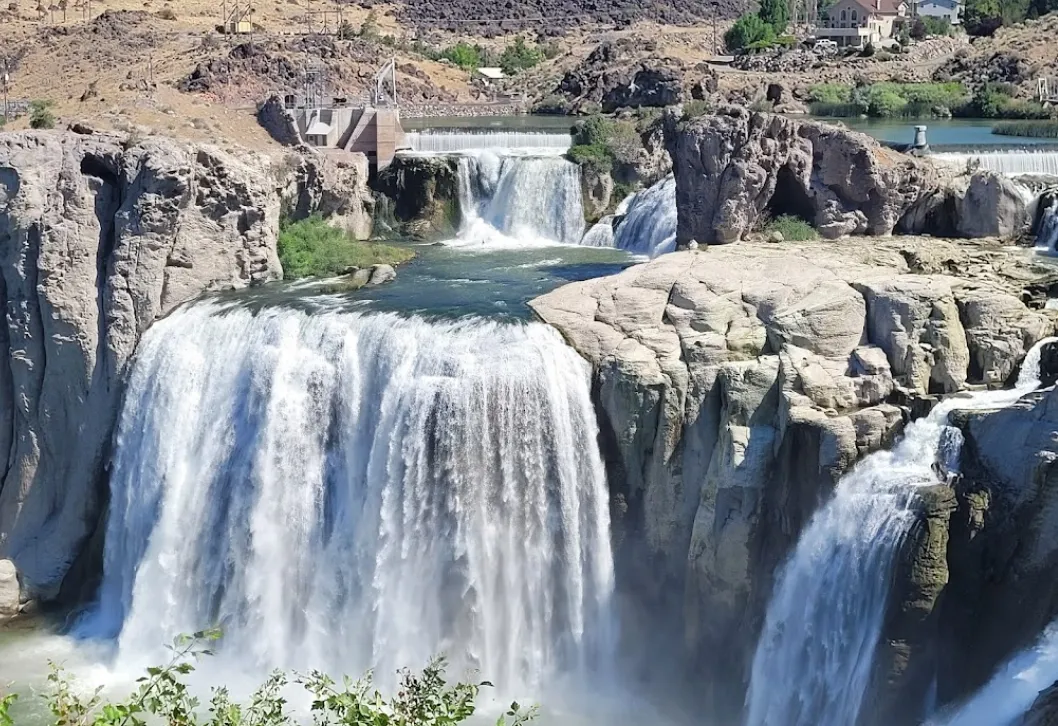
Most Americans have never heard of Shoshone Falls. That's a shame, because this thundering cascade in the Snake River Canyon outside Twin Falls, Idaho is genuinely one of the most spectacular waterfalls in the country — and at 212 feet tall and 900 feet wide, it's technically larger than Niagara Falls. The nickname "Niagara of the West" isn't marketing hype. It's earned.
The Facts: Just How Big Is Shoshone Falls?
Shoshone Falls drops 212 feet (64 meters) — about 36 feet taller than Niagara Falls — into the Snake River Canyon below. At its widest, the falls span roughly 900 feet across, easily exceeding Niagara's famous Horseshoe Falls in width when measured at peak flow. The canyon walls rise up to 500 feet above the river, creating a dramatic natural amphitheater around the falls.
The falls are formed on the Snake River, the same river that carved the 900-foot-deep Snake River Canyon through the high desert plain of southern Idaho. The surrounding landscape — sagebrush desert giving way to sheer basalt canyon walls — makes the falls feel especially dramatic, almost surreal. You don't expect to round a bend in the road and see this.
- Height: 212 feet (64 meters) — taller than Niagara
- Width: Up to 900 feet at peak spring flow
- River: Snake River, Twin Falls County, Idaho
- Nearest city: Twin Falls, Idaho (5 miles away)
Entry Fee and Getting There
One of the best things about Shoshone Falls is how accessible and affordable it is. The park entrance fee is just $5 per vehicle — yes, for the whole car, not per person. This gets you access to the main viewpoint area, restrooms, and the park grounds. There's no advance reservation required; just show up and pay at the gate.
Shoshone Falls Park is located about 5 miles northeast of downtown Twin Falls on Falls Avenue. From Twin Falls, take Falls Avenue east until it dead-ends at the park entrance. The entire drive takes about 10 minutes. If you're driving through on I-84, take Exit 173 (Twin Falls) and head south into town, then east on Falls Avenue.
Best Time to Visit — Spring vs. Summer
Shoshone Falls is fed by snowmelt from the mountains upstream, which means its flow varies dramatically by season. Here's what to expect:
- March through May: Peak flow season. Spring snowmelt sends maximum water over the falls — this is when Shoshone earns its Niagara comparisons. The mist is heavy, the roar is constant, and the falls are truly awesome. This is the best time to visit for maximum impact.
- June and July: Flow begins tapering but is still impressive. Weather is warm and pleasant. This is the most popular visitor season.
- August and September: Water levels are lower as the summer heat and reduced snowmelt take effect. The falls are narrower and less dramatic, but the canyon views are still beautiful and crowds are smaller.
- October through February: Minimal flow. The falls may be largely dry or reduced to a trickle. The canyon and park are still open, but if you're coming for the waterfall, avoid this window.
If you can only pick one time: late April or early May hits the sweet spot of maximum flow, reasonable weather, and manageable crowds before summer peaks.
Viewpoints, Trails, and Things to Do at the Park
The main viewing area at Shoshone Falls Park is a paved observation deck directly above the falls, giving you a face-on view of the full cascade. There are several viewing levels connected by short paved paths and stairs. The mist from the falls can be surprisingly heavy on high-flow days — bring a light rain jacket if you want to get close.
Beyond the main falls overlook, the park offers several other attractions:
- Swimming area: A small beach and designated swimming area in the Snake River below the falls (downstream, away from the cascade). Open in summer, it's a popular spot for locals to cool off. No lifeguard on duty.
- Dierkes Lake Park: Directly adjacent to Shoshone Falls, Dierkes Lake is a small reservoir in the canyon that offers swimming, a roped beach area, picnic tables, and some basic hiking on trails above the canyon rim. It's included with the same $5 vehicle entry fee and is worth exploring after the falls.
- Picnic areas: Several shaded picnic areas in the park, with tables and grills — perfect for a packed lunch after walking the viewpoints.
- Canyon rim views: Short trails lead along the canyon rim above the falls, offering aerial perspectives looking down into the gorge and across the falls from the side.
Twin Falls: Evel Knievel and the Snake River Canyon
Twin Falls itself is worth spending a few hours exploring before or after the falls. The city of about 50,000 sits right on the canyon rim, and there are several free viewpoints along the canyon edge within the city.
The most historically notable spot is the Evel Knievel Jump Site, located near the canyon rim about 2 miles from downtown. In 1974, daredevil Evel Knievel attempted to jump the entire Snake River Canyon on a steam-powered rocket cycle called the Skycycle X-2. The attempt famously failed when a parachute deployed prematurely and he drifted back into the canyon below. A historical marker commemorates the spot — it's free to visit and a fascinating piece of American pop culture history.
The Perrine Bridge, which spans the Snake River Canyon within Twin Falls, is one of the few bridges in the US where BASE jumping is legal year-round without a permit. On any given weekend, you can watch jumpers leap off the bridge and parachute into the canyon below — entirely for free from the bridge walkway.
Budget Accommodation in Twin Falls
Twin Falls is a practical, affordable base for your visit — far cheaper than tourist towns like Boise or Sun Valley.
- Chain hotels (Holiday Inn, Hampton Inn, Comfort Inn): $80–$130/night — Twin Falls has most major chains and they're competitively priced
- Budget motels: Several independent motels along Blue Lakes Blvd offer rooms for $60–$90/night — decent value for a short stay
- Nearest campgrounds: Shoshone Falls Park has no overnight camping, but several RV parks and campgrounds are within 15 miles of Twin Falls
If you're road tripping through Idaho, Shoshone Falls makes a perfect day stop between Boise (1.5 hours west) and southern Utah or Nevada. It's right on the I-84 corridor and requires minimal detour for massive payoff.