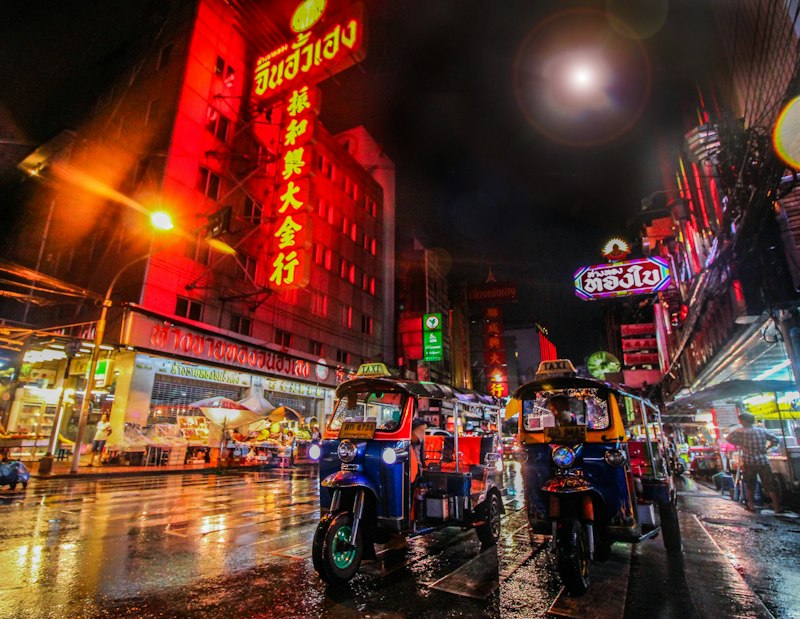
There is a reason backpackers have been descending on Southeast Asia for decades — and that reason is simple: no other region on earth gives you this much for this little. Ancient temples, turquoise beaches, world-class street food, warm-water diving, and genuinely jaw-dropping landscapes, all available for the price of a fast-food meal back home.
But in 2026, with inflation touching every corner of the globe, travelers are rightly asking: is the legendary "$30/day" budget still realistic? The honest answer is yes — in most of Southeast Asia, $30 a day is not backpacker-miserable. It is comfortable. Air-conditioned room, two or three restaurant meals, a temple tour, and a cold beer at sunset. With a few smart choices, you can stretch it even further or treat yourself without blowing the bank.
This guide breaks it all down by country: accommodation, food, transport, and activities — with real numbers, the cheapest cities, insider tips, and direct links to the best deals so you can plan with confidence.
Is $30/Day Still Realistic in Southeast Asia?
Let's be direct. $30 a day will feel very different in Chiang Mai, Thailand versus Bali's Seminyak strip or a touristy Phnom Penh rooftop bar. Location and lifestyle matter enormously. Here is the honest picture:
- Vietnam, Cambodia, and rural Thailand: $30/day is comfortable — private room, multiple meals out, transport, and an activity or two.
- Bali and the Philippines: $30/day is doable if you stay in budget guesthouses, eat local, and avoid the resort beach clubs. But it requires more discipline.
- Bangkok and tourist hubs: Still achievable, though you will need to seek out local markets and street stalls rather than tourist-facing restaurants.
- Singapore: Not remotely possible. Budget $120–150+/day. Use it as a flight hub only.
The $30/day figure in this guide assumes a private budget room (not a dorm), street food and local restaurants, public or shared transport, and a mix of free and paid activities. If you are willing to stay in dorms, you can knock $8–12 off that number immediately.
🇹🇭 Thailand — $25–40/Day
Thailand is where most first-time Southeast Asia travelers land, and for good reason. It has an outstanding tourism infrastructure, insanely good food, some of the world's best beaches, and cities that reward exploration. Even Bangkok — which feels expensive relative to the rest of the country — is astonishingly affordable by Western standards.
Best Budget Cities
- Chiang Mai — The budget traveler's paradise. Excellent guesthouses for $12–18/night, incredible street food, world-class cooking classes, temple-hopping, and easy day trips. Your money goes furthest here.
- Pai — Tiny mountain town beloved by backpackers. Extremely cheap, laid-back, surrounded by waterfalls and hot springs. Budget $20–28/day easily.
- Koh Tao — Despite being an island, Koh Tao remains surprisingly affordable. Budget dive courses are cheaper here than almost anywhere in the world.
- Kanchanaburi — Inland, historical, and far cheaper than coastal resorts. A hidden gem for budget travelers.
Most Expensive Areas (Still Affordable)
- Koh Samui — The most resort-heavy island. Budget $40–60/day unless you seek out guesthouses on the back streets.
- Phuket — Patong Beach area is tourist-priced. Stay in Phuket Town for half the cost.
- Bangkok — More expensive than the north, but the sky train (BTS) is cheap and street food is everywhere. Budget $35–45/day.
Thailand Daily Budget Breakdown
| Category | Budget Option | Estimated Cost/Day |
|---|---|---|
| Accommodation | Budget guesthouse / private room | $12–20 |
| Food | Street food, local restaurants | $5–10 |
| Transport | Songthaew, tuk-tuk, local buses | $3–5 |
| Activities | Temple entry, day tours, beaches | $5–10 |
| Daily Total | $25–45 |
For accommodation, Booking.com has an outstanding selection of budget guesthouses and boutique hotels across Thailand — filter by guest rating and price to find gems well under $20/night that have air conditioning and free breakfast. You will be surprised what $15 gets you in Chiang Mai.
🇻🇳 Vietnam — $20–35/Day
Vietnam might be the single best value country in all of Southeast Asia. The food alone is worth the flight — pho, banh mi, fresh spring rolls, bun cha, and coffee culture that rivals anything in the world. Pair that with dramatic karst landscapes in Ha Long Bay, pristine beaches along a 3,000km coastline, living history in Hue and Hoi An, and the buzzing energy of Hanoi and Ho Chi Minh City, and you have a country that overdelivers at every budget level.
Cheapest Cities & Regions
- Hanoi — Atmospheric, cultural, and extremely affordable. The Old Quarter has budget hostels and guesthouses from $10–16/night. Street food here is some of the cheapest in the country.
- Hoi An — The ancient town is a UNESCO gem. Stay a few blocks outside the historic center to halve accommodation costs. Market food and local lunch spots cost $1.50–3.
- Hue — Vietnam's imperial capital is overlooked by tourists and priced accordingly. One of the cheapest cities in the country with exceptional food.
- Ninh Binh — Often called "Ha Long Bay on land." Far cheaper than Ha Long itself and equally dramatic.
More Expensive (Still Very Affordable)
- Ho Chi Minh City (Saigon) — More expensive than the north but still easily managed on $30–35/day. The Pham Ngu Lao backpacker district has budget options everywhere.
- Da Nang / My Khe Beach — Beach resorts push prices up. Offset by eating in local spots rather than beachfront restaurants.
Vietnam Daily Budget Breakdown
| Category | Budget Option | Estimated Cost/Day |
|---|---|---|
| Accommodation | Budget hotel / guesthouse | $10–16 |
| Food | Street food, pho shops, banh mi | $4–8 |
| Transport | Grab (ride-share), local buses | $2–5 |
| Activities | Museum entry, tours, boat trips | $4–8 |
| Daily Total | $20–37 |
Book accommodation in Vietnam through Booking.com — the selection of family-run guesthouses and boutique hotels is exceptional, often with included breakfast that will set you up for the day. For tours — Ha Long Bay cruises, Hoi An lantern tours, and Mekong Delta day trips — Viator has vetted operators with transparent pricing so you know exactly what you are getting before you book.
🇰🇭 Cambodia — $20–30/Day
Cambodia is one of the most underrated destinations in all of Southeast Asia. It is cheaper than Thailand, more accessible than Myanmar, and home to one of the greatest architectural achievements in human history — Angkor Wat. Beyond the temples, Cambodia offers river life along the Mekong and Tonle Sap, pristine islands in the Gulf of Thailand, and a warmth from locals that consistently floors first-time visitors.
Siem Reap vs. Phnom Penh
Siem Reap exists almost entirely because of Angkor Wat, and it is priced accordingly — though still extremely affordable by global standards. Budget guesthouses run $12–18/night, and the Pub Street area has cheap food and drink. Budget $25–35/day including your Angkor pass (which covers multiple days — buy a 3-day pass to spread the cost).
Phnom Penh is the capital and slightly cheaper for day-to-day living outside the riverfront tourist strip. It offers genuine cultural depth — the Royal Palace, the National Museum, and the sobering but essential visits to the Killing Fields and Tuol Sleng Genocide Museum. Budget $22–30/day.
Kampot and Kep on the southern coast are beloved by long-stay travelers for their laid-back pace and extremely low prices. Rent a bicycle for $3/day and explore at leisure.
Cambodia Daily Budget Breakdown
| Category | Budget Option | Estimated Cost/Day |
|---|---|---|
| Accommodation | Budget guesthouse / $1 beers included | $10–18 |
| Food | Local eateries, market stalls | $4–7 |
| Transport | Tuk-tuk, shared taxi, Grab | $2–5 |
| Activities | Angkor pass (amortized), museums | $5–10 |
| Daily Total | $21–40 |
For Angkor Wat tours, sunrise experiences, and guided temple explorations, GetYourGuide has highly-rated licensed guides who bring the history to life in ways a solo wander simply cannot match. A private tuk-tuk driver for the day runs about $15–20 and is excellent value — book through GetYourGuide for vetted drivers with English commentary.
🇮🇩 Indonesia / Bali — $30–50/Day
Bali occupies a unique position in Southeast Asia's budget landscape. It is slightly pricier than Vietnam or Cambodia, but it offers something the others cannot — a fully-formed infrastructure for digital nomads and long-stay travelers, combined with genuine spiritual culture, world-class surfing, and lush rice terraces that feel lifted from a painting.
The key to Bali on a budget is choosing the right neighborhood and avoiding tourist-trap restaurants. For a deeper dive into everything Bali offers, read our Bali on a Budget: Complete 2026 Travel Guide.
Where to Stay in Bali on a Budget
- Canggu — The digital nomad capital of Southeast Asia. Rice paddy views, excellent co-working cafes with fast WiFi, and a lively social scene. Budget $35–50/day. Slightly pricier but you get lifestyle value.
- Ubud — Cultural heart of Bali. Yoga retreats, cooking classes, Monkey Forest, rice terrace walks. Private rooms from $18–28/night. Budget $30–45/day.
- Seminyak / Kuta — Beach areas popular with Australians. Trendy beach clubs inflate costs significantly. Budget $40–60/day.
- Nusa Penida — The island off the southeast coast has some of Bali's most dramatic scenery (Kelingking Beach, Angel's Billabong). Still relatively undeveloped — guesthouses from $12–20/night.
- Lovina — The quiet north coast. Extremely affordable, minimal tourist infrastructure. Perfect for travelers who want off-the-beaten-path Bali.
Bali Daily Budget Breakdown
| Category | Budget Option | Estimated Cost/Day |
|---|---|---|
| Accommodation | Guesthouse (Ubud/Nusa Penida) | $15–28 |
| Food | Warung local eateries | $6–12 |
| Transport | Motorbike rental / Grab | $4–8 |
| Activities | Temple visits, surf lessons, hikes | $5–12 |
| Daily Total | $30–60 |
Traveling with a group? Bali's villa culture is extraordinary value when split between four or more people. Stunning private pool villas in Ubud or Canggu that would cost $200+/night become $30–40 per person. VRBO has an exceptional selection of Bali villas from private rice paddy retreats in Ubud to beachside properties in Seminyak — often at better prices than comparable hotel rooms when split as a group.
🇵🇭 Philippines — $25–40/Day
The Philippines is Southeast Asia's island-hopping paradise — over 7,600 islands, world-class snorkeling and diving, powder-white beaches, and a population of genuinely warm, English-speaking locals. It is slightly less visited than Thailand or Bali, which means prices remain lower and beaches remain less crowded.
Best Budget Destinations
- Palawan — Puerto Princesa and El Nido are crown jewels. Island-hopping tours through the Bacuit Archipelago are a world-class experience at $20–30. Budget $35–45/day in El Nido during peak season.
- Siargao — Surfer's paradise with a laid-back vibe. Cloud 9 wave, mangrove tours, and lagoon-hopping. Budget $30–45/day including a surf lesson.
- Cebu — Great base for whale shark encounters in Oslob and canyoneering at Kawasan Falls. Budget $28–38/day.
- Bohol — Chocolate Hills, tarsiers, Loboc River cruises. Extremely affordable with budget resorts from $18–25/night.
Philippines Daily Budget Breakdown
| Category | Budget Option | Estimated Cost/Day |
|---|---|---|
| Accommodation | Budget guesthouse / beachside cottages | $15–25 |
| Food | Carinderias (local eateries), turo-turo | $5–8 |
| Transport | Jeepney, tricycle, ferry | $3–6 |
| Activities | Island tours, snorkeling, diving | $5–12 |
| Daily Total | $28–51 |
Island-hopping tours in El Nido and Coron, whale shark snorkeling in Cebu, and canyoneering adventures are best booked through Viator or GetYourGuide — both have vetted local operators with safety standards, English-speaking guides, and transparent pricing. Skip the random touts on the beach and book in advance, especially in peak season (December–April).
Getting to Southeast Asia from the US
The flight is the biggest single cost for any Southeast Asia trip, so getting this right saves you hundreds of dollars — sometimes more than you will spend on accommodation for an entire two-week stay.
Best Routing from North America
There is no direct flight from the US to most of Southeast Asia. You will connect through one of a handful of major hubs:
- Tokyo (NRT/HND) — Great for Thailand, Vietnam, and the Philippines. Japan Airlines and ANA connections are often the best value from the West Coast.
- Seoul (ICN) — Korean Air and Asiana have excellent connections throughout Southeast Asia.
- Hong Kong (HKG) — Cathay Pacific is consistently strong for Bali, Bangkok, and the Philippines.
- Singapore (SIN) — Singapore Airlines is premium but worth the cost if you can get a deal. Singapore makes an excellent 2–3 day stopover en route to anywhere in the region.
- Doha (DOH) via Qatar Airways — Surprisingly good routing from East Coast cities to Southeast Asia.
Best gateway airports in the region:
- Bangkok (BKK/DMK) — Suvarnabhumi (BKK) is the main hub; Don Mueang (DMK) is the budget airline hub. Fly into Bangkok and connect onward for very little.
- Bali (DPS) — Now has more direct long-haul connections, great for starting an Indonesia trip.
- Singapore (SIN) — The most connected hub in the region, excellent onward connections to every country in this guide.
- Kuala Lumpur (KUL) — AirAsia's home base. Exceptionally cheap onward connections to the entire region.
For finding the cheapest flights from any US city to Southeast Asia, Aviasales searches hundreds of airlines simultaneously and consistently surfaces the best fares — including budget carriers that many US-focused search engines miss. Also check Booking.com's flight search for package deals that combine your international flight with first-night accommodation.
Getting Between Countries on a Budget
Once you are in the region, getting between countries is remarkably affordable. The budget airline network in Southeast Asia is one of the best in the world.
Budget Airlines
- AirAsia — The region's dominant budget carrier. Routes connect Kuala Lumpur to virtually everywhere. Fares of $20–50 for intra-regional flights are common if booked 4–6 weeks out.
- VietJet Air — Vietnam's budget carrier, excellent for Vietnam domestic routes and regional connections.
- Scoot — Singapore Airlines' budget arm. Slightly more comfort than the cheapest options.
- Cebu Pacific — Philippines' budget airline with great domestic connections and some regional routes.
- Nok Air / Thai Lion Air — Good for Thailand domestic connections to the islands.
Overland Options
The Thailand–Cambodia, Cambodia–Vietnam, and Vietnam–Laos borders are all crossable overland and can be extremely cheap ($5–15 for bus tickets). The experience of crossing a land border in Southeast Asia is a travel rite of passage. Reputable bus companies like Giant Ibis (Cambodia) and The Sinh Tourist (Vietnam) run comfortable direct services between major cities across borders.
The Thailand–Malaysia overland route by train is legendary — the Eastern and Oriental Express runs the luxury version, but the local train from Bangkok to the Malaysian border and onward to Kuala Lumpur is a classic journey done for under $30.
Accommodation: Where to Sleep for Less
Accommodation is your biggest variable budget cost in Southeast Asia, and the range is extraordinary — from $4 dorm beds to $200 pool villas. Here is how to navigate it:
Budget Hostels ($4–12/night)
Dorm beds in Southeast Asia are a world away from the stereotypical dingy hostel. In Chiang Mai, Hanoi, and Ho Chi Minh City, hostel dorms include air conditioning, en-suite bathrooms, fast WiFi, and free breakfast for $6–10/night. Social hostels also make it very easy to meet other travelers and find partners for day trips, which cuts costs further.
Budget Guesthouses & Private Rooms ($12–25/night)
This is the sweet spot for most travelers. Family-run guesthouses throughout Thailand, Vietnam, and Cambodia offer private double rooms with air conditioning, hot water, and often breakfast included for $12–20/night. Standards have risen dramatically in recent years. Booking.com's "Genius" discount program regularly knocks 10–15% off these guesthouses, and the free cancellation options give you flexibility if plans change.
Comparing Prices Across Platforms
Never book the first price you find. Trivago aggregates prices across dozens of booking platforms simultaneously, often surfacing deals that are not visible on any single site. Hotels.com's loyalty program gives you a free night for every 10 nights booked — if you are doing an extended Southeast Asia trip, this adds up fast.
Vacation Rentals for Groups ($15–30/person/night)
If you are traveling with 3 or more people, vacation rentals are often dramatically better value than hotels. A stunning pool villa in Ubud or a beachside house in Koh Lanta split four ways can cost the same as a budget guesthouse per person — with a kitchen to cook your own meals, saving even more on food. VRBO has excellent inventory throughout Bali, Thailand, and the Philippines, with whole-property rentals that give you complete privacy.
Food Budget: Eating Like a King for $5–10/Day
Southeast Asia is home to some of the world's greatest food cultures, and the street food is the best of it — not a consolation prize. A bowl of pho in Hanoi, pad see ew in Chiang Mai, nasi goreng in Bali, or amok fish curry in Phnom Penh will cost between $1 and $3 from street vendors and local market stalls. These are not "budget versions" of the real thing. This is the real thing.
Where to Eat
- Morning markets — Best value of the day. Local workers eat here before sunrise. Noodle soups, rice dishes, fresh fruit for $0.75–$2.
- Food courts and hawker centres — Covered, clean, and cheap. Every major city has these. Budget $2–4 per meal.
- Local restaurants with no English menu — If a restaurant has a photo menu in English with European prices listed next to local dishes, walk past it. Duck into the place down the alley where the plastic chairs face a bubbling wok.
- Cooking your own breakfast — If your accommodation has a kitchen, buying fruit, eggs, and bread from a local market for breakfast is $1–2 and saves you $4–6 over café prices.
What to Avoid
- Restaurant rows immediately adjacent to major tourist attractions — the Angkor Wat "restaurant strip," Khao San Road in Bangkok, beachfront restaurants in Koh Samui. Prices are 3–5x local rates.
- Set tourist menus in tourist areas — often poor quality at inflated prices.
- Imported Western food — cheese, pasta, wine. Budget dramatically more if these are non-negotiable for you.
The $30/Day Master Budget Table
| Country | Accommodation | Food | Transport | Activities | Daily Total |
|---|---|---|---|---|---|
| Thailand | $12–20 | $5–10 | $3–5 | $5–10 | $25–45 |
| Vietnam | $10–16 | $4–8 | $2–5 | $4–8 | $20–37 |
| Cambodia | $10–18 | $4–7 | $2–5 | $5–10 | $21–40 |
| Bali / Indonesia | $15–28 | $6–12 | $4–8 | $5–12 | $30–60 |
| Philippines | $15–25 | $5–8 | $3–6 | $5–12 | $28–51 |
All figures in USD. Lower end assumes dorm or basic private room and street food only. Upper end assumes budget private rooms, mix of local and tourist restaurants, and paid activities daily.
When to Go: Navigating Rainy Seasons
Southeast Asia does not have a single rainy season — each country (and each coast) runs on its own weather calendar. Getting this wrong can mean two weeks of rain at the beach. Here is the quick breakdown:
- Thailand (north): Best November–April. Rainy season June–October. Chiang Mai gets smoky in March–April from burning season.
- Thailand (Gulf coast — Koh Samui): Best February–August. Rainy October–December.
- Thailand (Andaman coast — Phuket, Krabi): Best November–April. Rainy May–October.
- Vietnam (north — Hanoi): Best October–April. Rainy June–September.
- Vietnam (south — Ho Chi Minh City): Best December–April. Rainy May–November.
- Vietnam (central — Hoi An): Best February–August. Flooding risk October–December.
- Cambodia: Best November–March. Rainy June–October but still very visitable.
- Bali: Best April–October (dry season). Rainy November–March but never completely washed out.
- Philippines: Best December–May. Typhoon season June–November, though the east coast (Siargao) is affected differently than the west (Palawan).
Money Tips: ATMs, Currency, and Bargaining
Cash vs. Cards
Southeast Asia remains largely cash-dependent outside of major cities and modern establishments. You will need local currency for street food, markets, tuk-tuks, guesthouses, and most activities. ATMs are widely available throughout the region, but fees can sting — local ATMs charge $3–6 per withdrawal on top of whatever your home bank charges.
Best practice: Use a no-foreign-transaction-fee card with ATM fee reimbursement (Charles Schwab Investor Checking is a perennial favorite for US travelers). Withdraw larger amounts less frequently to minimize per-transaction fees. Keep $100–200 in USD as emergency backup — USD is widely accepted throughout Cambodia and the Philippines.
Should You Carry USD?
Cambodia actually uses USD as a parallel currency alongside the Riel. In the Philippines, USD is universally exchangeable. Across the rest of the region, USD is useful as a backup but local currency will always get you better rates. Exchange USD at in-country exchange booths rather than airport kiosks — airport rates are typically 10–15% worse.
Bargaining Etiquette
Markets and tuk-tuks operate on negotiated prices. Accommodation and restaurants generally do not (though low-season guesthouse rates are often negotiable if you are staying several nights). The golden rule: bargain with a smile, never get aggressive, and if you agree on a price, honor it. The starting price from a vendor is usually 50–100% above what they will accept, so a counter-offer of 50–60% of the asking price is a reasonable opening position.
Activities: Worth Splurging vs. Free Alternatives
Worth Every Penny
- Angkor Wat, Cambodia — Pay for a multi-day pass and hire a knowledgeable guide. This is a once-in-a-lifetime site. Use GetYourGuide for vetted Angkor guides.
- Ha Long Bay overnight cruise, Vietnam — The landscape is incomparable and you need to be on the water to experience it. A quality 2-night cruise runs $80–120 all-in and is worth every dollar.
- Learn to dive (PADI Open Water), Thailand — Koh Tao is one of the cheapest places in the world to get certified. $300–350 for the full course. This certification lasts a lifetime.
- Island-hopping tour, Philippines — Palawan's Bacuit Archipelago is inaccessible without a boat. The tour is the destination. Book through Viator for quality-vetted operators.
- Thai cooking class, Chiang Mai — Learning to cook pad thai, green curry, and som tam for $30–40 is a skill you take home forever.
Excellent Free Alternatives
- Temple exploration — Bangkok's Wat Pho and Wat Arun charge small fees ($3–5) but dozens of other temples are free. Chiang Mai has 300+ temples.
- Beach days — Every beach in Southeast Asia is legally public. Pull up a chair (bring your own or rent a $2 beach chair) and the view is free.
- Hiking — Vietnam's Sapa region, Thailand's Doi Inthanon, and Bali's Mount Batur (sunrise hike) all offer world-class trekking for minimal or no cost beyond a guide.
- Night markets — Chiang Mai's Saturday Walking Street, Hoi An's Lantern Festival nights, and Bangkok's Chatuchak Weekend Market are all free to wander and extraordinary experiences.
- Free museum days — Many national museums throughout the region have free or heavily discounted days. Check locally.
- Fly into Bangkok, Kuala Lumpur, or Singapore for the cheapest gateway fares — compare with Aviasales.
- Book accommodation on Booking.com — filter by guest rating 8+ and free cancellation. Groups should check VRBO for villa splits.
- Eat at market stalls, morning markets, and local eateries. Avoid the photo-menu tourist restaurants near attractions.
- Use Grab (the Southeast Asian Uber) for transparent, non-negotiated prices in cities.
- Fly between countries on AirAsia or VietJet — book 3–4 weeks out for the best fares.
- Book big-ticket tours (Angkor, Ha Long Bay, island hopping) through Viator or GetYourGuide for vetted quality.
- Carry a no-foreign-fee debit card with ATM rebates. Withdraw larger amounts less often.
- Vietnam, Cambodia, and northern Thailand are the easiest countries to hit $30/day. Bali and the Philippines require more discipline but are very achievable.
Find Cheap Flights to Southeast Asia
Compare airfare to Bangkok, Bali, Hanoi, and more — find the lowest price in seconds.
Search Cheap Flights